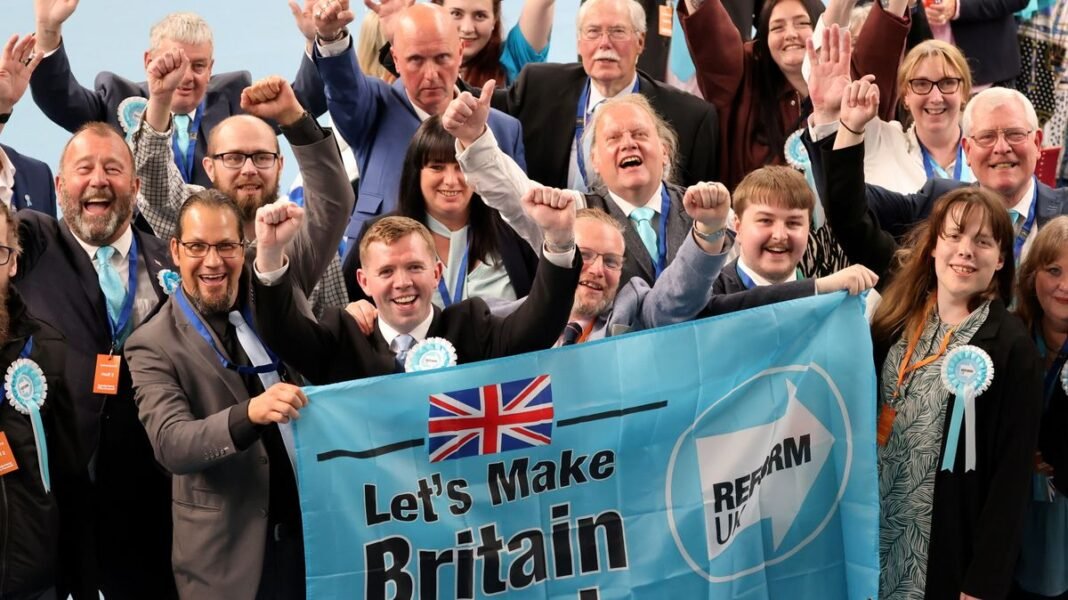
In Sunderland, a significant political shift occurred as Reform took over the council, ending over 50 years of Labour leadership. Despite substantial investments in the city, Reform secured 58 seats surpassing the required 38 for control, while the Liberal Democrats gained 12 seats. Labour saw a decrease to 43 councillors from the previous 48.
Paul Donaghy, a successful Reform UK candidate in Sunderland, expressed confidence in the party’s projected victory in 45-50 of the 75 contested seats. The influence of the national political landscape was evident in the election results, echoing the transformation seen in Durham county council, now under Reform’s governance.
The election outcome was perceived as a referendum on Keir Starmer by the city, with expectations for significant changes ahead. New Reform councillor Chris Eynon noted the growing support for a Reform-led council in Sunderland following the party’s success in Durham.
While plans for continued regeneration were emphasized, the focus shifted towards extending development beyond the city center to outlying areas and former coalfields. In response, Labour MP Lewis Atkinson pledged to continue advocating for the people of Sunderland against Reform’s governance.
Key issues highlighted included the necessity for economic growth, increased disposable income, and accelerated urban renewal. The challenge for Reform and the Liberal Democrats now lies in fulfilling their promises after transitioning from opposition to governance.
In reflecting on the campaign, the importance of unity and progress was stressed, especially in light of past divisive incidents. The electorate’s choice for Reform was seen as a call for change, distinct from endorsing specific political figures like Nigel Farage.
Amidst the evolving political landscape, the Labour Party aims to redefine itself and meet the expectations of its supporters in Sunderland and beyond.