Canada’s defense minister has announced a review of a directive from 2025 that governs the use of languages within military workplaces due to recent concerns. In January 2025, changes were made by the Department of National Defense (DND) and the Canadian Armed Forces regarding language requirements for internal activities and services like meetings and documents. Previously, units were categorized as English, French, or both.
A blog post from the DND in late July highlighted challenges faced by organizations and units in unilingual regions in meeting language obligations, leading to complaints and frustration. The directive, known as DAOD 5039-2, was implemented in January 2025, aligning internal language requirements with the language designation of the office location under the Official Languages Act. This meant that only workplaces in officially bilingual regions, such as New Brunswick, the National Capital Region, and parts of northern Ontario, were required to use English and French exclusively.
These changes did not impact communication with the public or military families. The military continued to promote the use of both official languages to enhance inclusion and uphold Canada’s linguistic diversity.
The blog post attracted attention and criticism from advocates and critics of official languages, as well as opposition parties, who viewed it as a weakening of French language protection within a major federal department. Responding to the concerns, Defense Minister David McGuinty stated that he takes them seriously and has initiated a review of workplace language designations to ensure they meet operational needs and respect the language rights of the Defense Team.
The review announcement did not specify a timeline. Following this, the Conservative Party called for an immediate reversal of the changes, emphasizing the importance of allowing Francophone members to work, lead, and progress in French even in predominantly English-speaking regions.
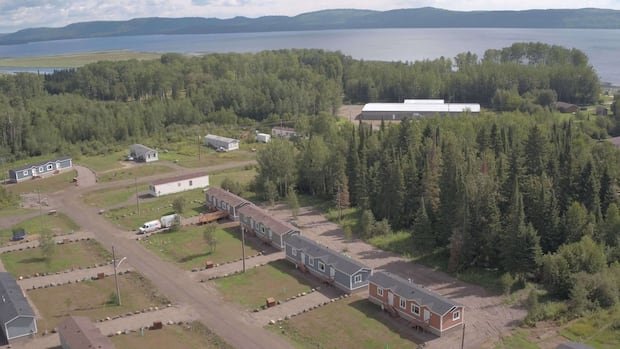
Image: Garrison Petawawa, located west of Ottawa, serves as an example of a military base situated outside a bilingual region.