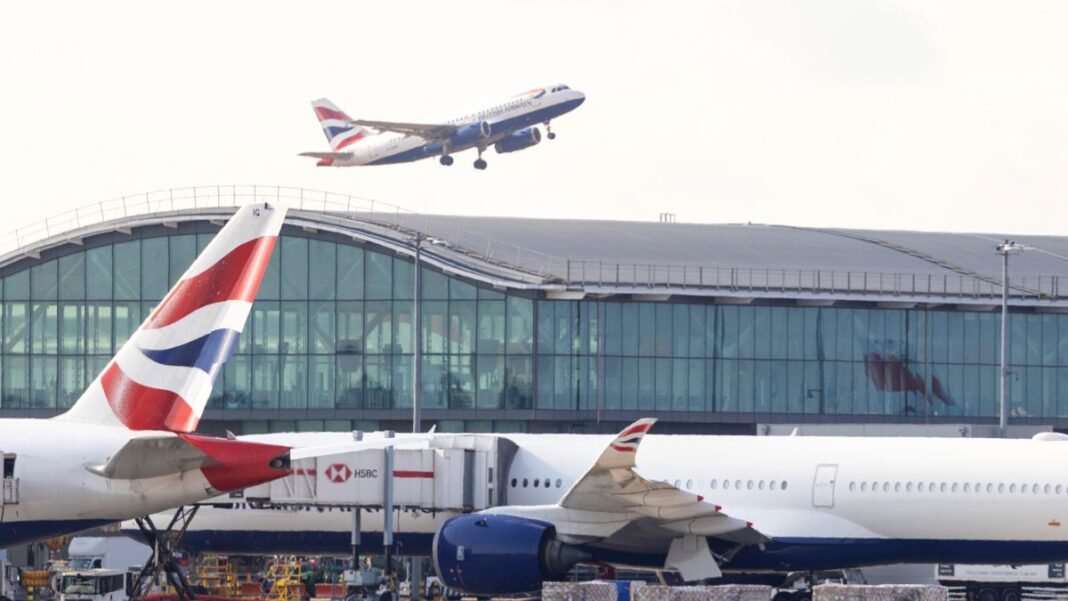
British Airways is planning to increase ticket prices due to the ongoing conflict in the Middle East, particularly involving Iran. Despite this, the airline assured customers that flights will continue as scheduled.
The International Airlines Group, which owns British Airways along with other airlines like Iberia and Aer Lingus, disclosed a significant £1.7 billion rise in its jet fuel expenses this year due to the repercussions of the Middle East turmoil. To counter this surge, the company intends to recover approximately 60% of the increased costs, roughly £1 billion, through a combination of higher fares and cost-cutting measures. The exact proportion of the increase in prices was not specified by IAG, as it will vary depending on the specific route and airline. However, Luis Gallego, the CEO of IAG, mentioned that British Airways, being a premium brand, would likely see a higher rate adjustment.
Despite the escalating fuel costs, the company clarified that it would not follow the trend of other airlines by introducing fuel surcharges to offset the cost spike. IAG downplayed concerns about potential jet fuel shortages, even amid reports of potential disruptions in the upcoming months, emphasizing that they are well-prepared for any fuel supply issues.
The blockade of the Strait of Hormuz, controlled by Iran, has led to a sharp increase in jet fuel prices, particularly affecting shipments to Asia. As a result, several airlines have scaled back their planned flights, with data showing a global reduction of 13,000 flights this month.
IAG expressed confidence in its ability to secure enough jet fuel for the busy summer travel season. Gallego reassured, stating that they foresee no fuel availability issues in their main markets, attributing this to their investments in fuel self-supply at their key hubs.
While airlines are striving to avoid flight cancellations, concerns persist regarding potential service reductions if the conflict in the Middle East persists. Gallego emphasized that they are effectively managing the uncertainties arising from the fuel price surge and remain optimistic about their business model and strategy.
Despite softer demand in the eastern Mediterranean, IAG reported strong market demand across most of their operations. The company’s profits for the first quarter totaled £365 million, showing a significant increase of 76.6% compared to the previous year.
Russ Mould, an investment director, highlighted that IAG’s proactive measures to mitigate the impact of higher fuel prices and ensure flight operations could distinguish them in a challenging aviation landscape. The company’s commitment to maintaining service reliability during this period of fuel price volatility may enhance customer trust and loyalty.
The future outlook remains uncertain, with IAG acknowledging the possibility of flight schedule disruptions post-summer if the conflict situation persists and triggers global jet fuel restrictions.