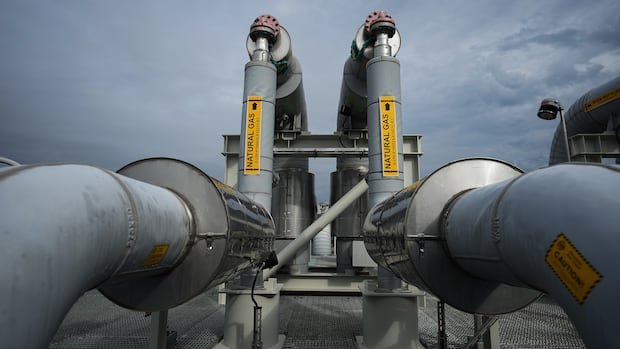
In a recent speech, Prime Minister Mark Carney highlighted the significant role Canada plays in fueling American growth through natural gas exports. The potential consequences of halting these shipments to the U.S. have sparked discussions.
Despite the ongoing trade tensions between Canada and the U.S., energy products like oil and natural gas have not been used as bargaining chips. While Alberta Premier Danielle Smith opposes the idea, Ontario’s Doug Ford believes all options should be considered.
Carney emphasized that the U.S.’s reliance on Canadian energy is substantial, with Canada supplying a large portion of their natural gas, electricity, and crude oil imports. Although the U.S. heavily depends on Canadian natural gas imports, it represents only a small fraction of their overall consumption.
Dulles Wang, director of Americas gas and LNG at Wood Mackenzie, notes that while Canadian natural gas shipments to the U.S. are relatively small compared to domestic production, the regions where these deliveries occur are crucial. For instance, the Pacific Northwest heavily relies on Canadian gas imports.
Enbridge, headquartered in Calgary, stands as North America’s largest natural gas provider, with a significant presence in both Canada and the U.S. The company’s strategic acquisitions underscore the interconnectedness of the energy markets between the two countries.
Wang emphasizes the importance of the bi-directional flow of natural gas between Canada and the U.S., highlighting how both countries benefit from this exchange. Disrupting this flow could have severe economic repercussions, leading to an oversupply issue in Canada and a sharp decline in prices.
The Canadian government is exploring diversifying its energy exports beyond the U.S., with initiatives like the LNG Canada facility in Kitimat, B.C., targeting Asian markets. Wang stresses the need for continued support for such projects to reduce dependency on the U.S. market.
Overall, the potential cessation of U.S.-bound natural gas shipments from Canada could have detrimental effects on both countries, underscoring the necessity of maintaining the energy trade relationship.