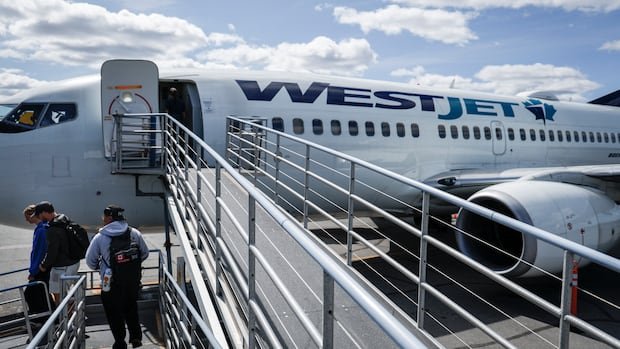
WestJet faces criticism from Canada’s transport regulator for creating obstacles for travelers with disabilities by restricting certain power wheelchairs from its aircraft. The Canadian Transportation Agency has ruled that WestJet must eliminate its 136-kilogram weight limit on mobility aids by July 2027.
To address the issue, the regulator suggests that WestJet utilize “spreader plates” to evenly distribute the weight of wheelchairs in the cargo hold and make alternative travel arrangements with other airlines until the weight cap is lifted.
The case was initiated by Winnipeg resident Steven Fletcher, a former federal minister of state for transport, who was denied boarding with his customized wheelchair on a Winnipeg to Toronto flight last year. Critics argue that the weight restriction has hindered air travel in certain regions and discriminated against individuals with disabilities.
Fletcher expressed disappointment, stating that WestJet should have taken proactive measures to accommodate power wheelchairs, as they have accommodated such devices in the past. WestJet declined to comment on the ongoing matter.
The final decision by the agency will determine the advance notice required for passengers using mobility aids when flying with the airline.
Last year, WestJet defended the weight limit as essential for flight safety, citing accessibility regulations that permit the refusal of heavier mobility aids. The company established the 136-kilogram threshold in 2024 following a technical evaluation of cargo hold weight limits on its Boeing aircraft.
Advocates stress that the weight restriction severely limits mobility for wheelchair users, particularly when other airlines have less stringent regulations. Cases like Fletcher’s and a 14-year-old girl from Saskatoon being denied travel due to wheelchair weight have sparked concerns about accessibility in air travel.
Advocates argue that the policy of restricting power wheelchairs presents challenges for individuals with disabilities, as other major North American airlines have higher weight limits for similar aircraft. B.C.-based Flair Airlines, which operates Boeing 737s exclusively, upholds a similar weight limit policy.
Fletcher emphasized the importance of accessible travel within one’s own country, stating that it is a fundamental right rather than a luxury.