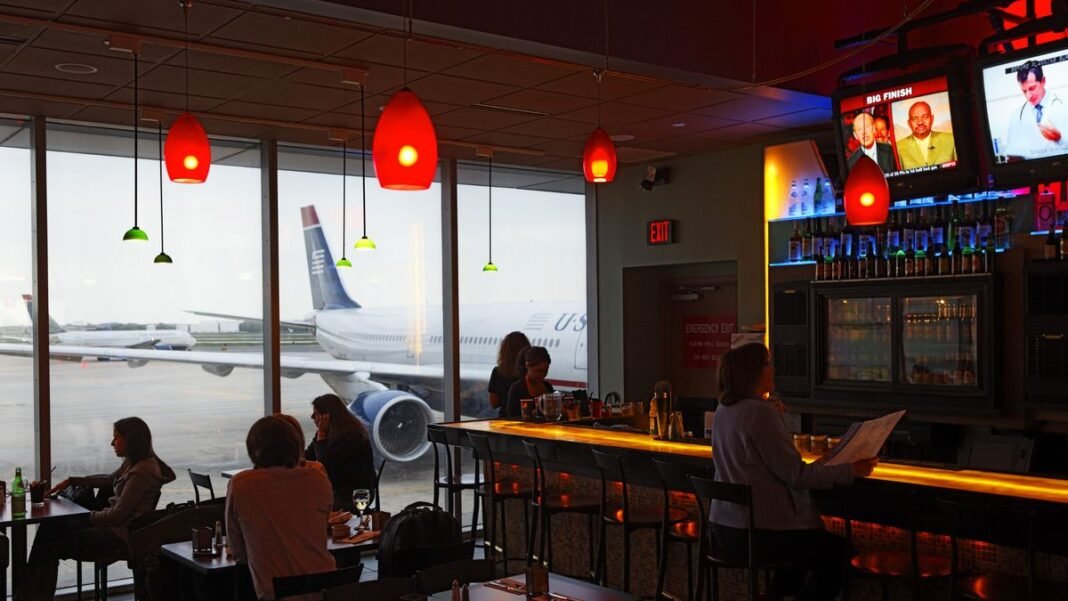
Airport bars are being urged to cease serving alcohol during early morning hours, according to the CEO of Ryanair. Michael O’Leary, who has led Ryanair for over three decades, has expressed concern over the frequent need to divert flights due to disruptive behavior from intoxicated passengers who spend extended periods drinking in airport bars before boarding.
Unlike regular bars, airport pubs are not subject to the same licensing regulations, creating a loophole that O’Leary believes contributes to in-flight disturbances. He emphasized the need for stricter alcohol serving times at airports to curb unruly behavior in the air.
O’Leary criticized the practice of serving alcohol at airports in the early hours, questioning the necessity of consuming alcohol at such times. He called for a ban on alcohol service outside of standard licensing hours to address the issue.
Recent incidents, such as a disruptive passenger causing chaos on a Ryanair flight, have highlighted the repercussions of excessive drinking before flying. O’Leary has long advocated for limiting passengers to two drinks each to prevent such incidents, accusing airports of prioritizing profits over safety.
While emphasizing Ryanair’s responsible alcohol service onboard, O’Leary noted the increasing influence of drug use in exacerbating aggressive behavior among passengers. He reiterated the serious consequences of being intoxicated on a plane, including potential imprisonment and hefty fines.
Instances of in-flight disturbances, like a violent altercation on a Jet2 flight, underscore the importance of maintaining order in the skies. O’Leary reaffirmed his commitment to enforcing strict rules and holding unruly passengers accountable for their actions, emphasizing the legal repercussions they may face.
Flights to popular destinations from the UK have experienced a spike in disruptive incidents, prompting calls for enhanced measures to ensure passenger safety. Recent cases, including a former soldier assaulting cabin crew on a Tenerife-bound flight, have underscored the need for vigilance in curbing in-flight misconduct.