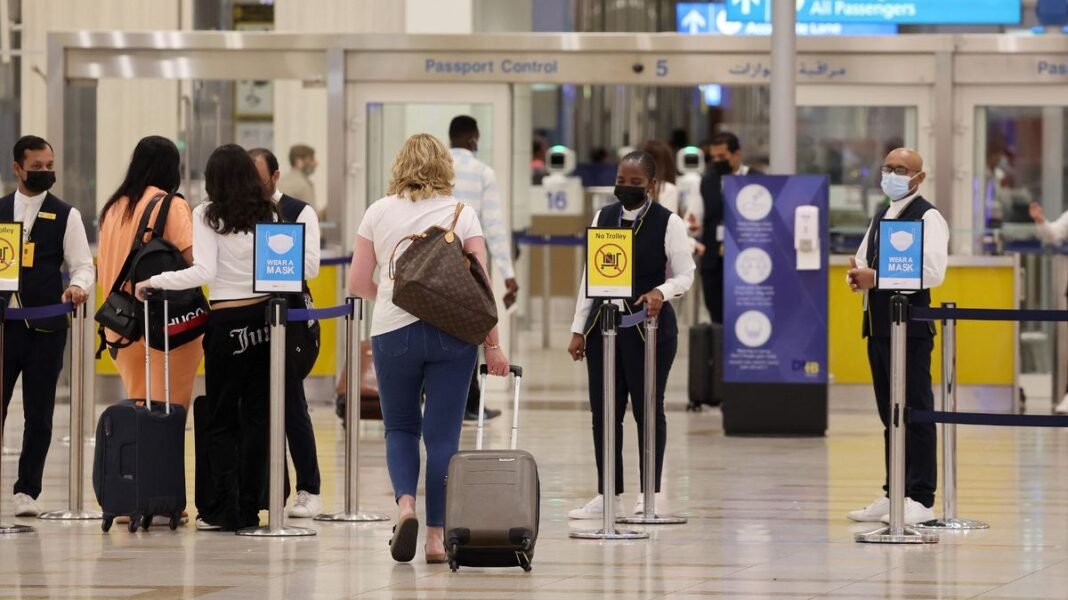
Summer is clearly underway, and British holidaymakers gearing up for their much-anticipated vacations have been advised to be extra cautious. The surge in jet fuel prices, skyrocketing by 120% since the initiation of the conflict in the Middle East, has raised concerns about potential shortages in the upcoming months. Airlines have already increased ticket costs, but further disruptions loom unless the reopening of the Strait of Hormuz occurs promptly.
Prior to the conflict, Europe had approximately 37 days’ worth of fuel supply. Presently, this figure is estimated to have decreased to around 30 days, with the International Energy Agency (IEA) cautioning that 23 days is the critical threshold where some airports might face fuel shortages.
Following the recent authorization for airlines to consolidate or cancel flights with a mere two weeks’ notice, experts are cautioning that the usual protections for passengers with special needs are at risk. The European Commission has indicated that the disruptions due to the ongoing fuel crisis in the Middle East will be categorized under “exceptional circumstances,” potentially preventing holidaymakers from claiming financial compensation in case of flight changes.
Declan Somers, a travel expert and CEO of Mobal, highlighted that the primary concern this summer is not just airport chaos, but the likelihood of passengers being separated. With airlines combining flights to conserve fuel, families who originally booked together may find themselves reassigned to replacement planes where they are scattered throughout the cabin.
It is important to note that there is no UK law mandating children to be seated with their parents on flights. Airlines have the legal authority to separate children, even those under five, from their parents, although this contradicts guidelines established by the Civil Aviation Authority (CAA). The CAA recommends that young children and infants should ideally be seated in the same row as the accompanying adult, or at most, separated by one row to facilitate emergency evacuations.
In the event of flight consolidations, families may be rebooked onto the same replacement flight but not necessarily seated together, as cautioned by Somers. While UK guidance advises airlines to prioritize seating children near their parents, there is no absolute assurance. To mitigate this risk, Somers advises parents to proactively select seats by booking directly with the airline, paying for seat selection, and promptly informing the airline about any special assistance requirements.
For individuals with disabilities or specific medical needs, travel expert Alexandra Dubakova raised concerns about emergency rebookings potentially overlooking specialized requirements, like extra legroom or specific seating arrangements for medical equipment. Dubakova highlighted the risk of passengers being de-boarded or reassigned to aircraft lacking the necessary configurations they originally paid for due to the ongoing fuel crisis.
The erosion of consumer rights is a significant worry, particularly for those needing special assistance, as airlines may not be under the same financial obligations to provide their standard level of care during “exceptional circumstances.” Scope guidance recommends booking special assistance at least 48 hours in advance, yet with imminent aircraft substitutions, these arrangements might no longer be guaranteed.
Smaller regional airports, lacking the on-site fuel storage capacities of major hubs, are anticipated to be most affected by the disruptions. Families and travelers with disabilities are advised to plan for potential delays by allowing extra time.
Experts suggest opting for the first flight of the day, selecting flights from larger airports when feasible, and ensuring an adequate supply of medication at least four weeks in advance. UK airlines have reassured that they are presently unaffected by supply issues, with the government prepared to collaborate with the industry for swift interventions if necessary.
Leading budget airlines in Europe, such as Jet2, easyJet, and TUI, have affirmed their commitment to maintaining regular flight operations throughout the upcoming peak holiday season despite fuel price escalations. Transport Secretary Heidi Alexander emphasized the importance of preparing in advance to ensure long-term stability and minimal disruptions during the summer travel period.
British Airways, for example, ensures that children will not be seated alone away from their parents, with families pre-assigned seats on the same Passenger Name Record (PNR) to guarantee that all children under 12 are seated with at least one adult on the same booking. Other airlines like Tui and Virgin Atlantic offer similar reassurances on their respective websites.
In conclusion, airlines are working diligently to maintain normal operations and provide passengers with a safe and smooth travel experience amid the ongoing challenges posed by the Middle East fuel crisis.