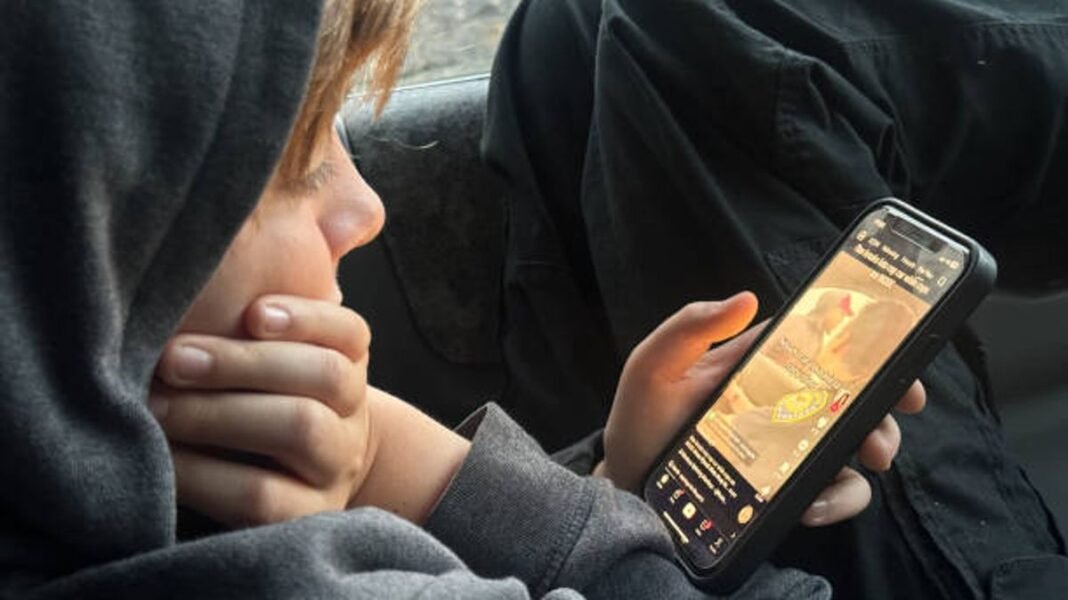
Calls for increased male involvement in a public consultation on online safety have emerged, revealing a lack of participation from fathers in the UK. Despite instances of harm faced by boys and young men such as body shaming, misogynistic remarks, and addictive behaviors, only a small fraction of parent responses have been from dads. The government-led 12-week consultation, aimed at enhancing online safety measures for children and youth, is set to conclude on May 26, with dads contributing less than 6,500 responses out of the 28,000 collected so far.
Various proposals under scrutiny include enforcing a social media prohibition for children under 16, setting screen-time restrictions, and implementing phone bans in schools. Labour’s Kanishka Narayan MP, the Minister for Online Safety, has stressed the importance of wider male engagement, emphasizing the crucial role fathers play in safeguarding their children online. The lack of male involvement, according to Lee Chambers, CEO of Male Allies UK, may be attributed to concerns about judgment, fear of misspeaking, or a perception that online safety issues mainly affect women.
Chambers highlighted that online misogyny is prevalent, with men and boys potentially viewing the issue as distant from their own experiences. Specific challenges faced by males online, such as gambling and isolation linked to reliance on AI companions and gaming, often go unaddressed due to a reluctance to seek help. Encouraging men and boys to participate in the consultation, Chambers called for strategies to normalize male engagement and tailor the approach to resonate with male interests and preferences.
Moreover, regional participation in the consultation varies, with lower response rates observed in the Midlands, the north of England, Scotland, Wales, and Northern Ireland. The government aims for broader representation across the UK, emphasizing the importance of diverse perspectives in shaping online safety policies. Individuals are urged to engage in the consultation by visiting the government’s ‘Growing up in an online world’ platform. For further support on related issues, resources are available through NSPCC and InternetMatters.org.