Children in Ukraine are facing a grave threat as toy-like mines, known as “Pryanik,” are being dropped from the sky, leading to fatal consequences. These small, round munitions, disguised to appear harmless, are causing severe injuries and deaths in frontline cities where hidden explosives have become a pervasive danger.
According to humanitarian groups, this tactic is part of a broader strategy that has turned daily life in southern Ukraine into a risky game of survival. Yuriy Boyechko, the founder of Hope For Ukraine, described the city of Kherson as a “minefield” due to the deployment of these disguised explosives by Russian forces using first-person-view drones.
The deliberate placement of these mines in residential areas poses a significant threat to civilians, creating a dual danger of drone strikes from above and hidden explosives on the ground. This evolving warfare tactic, actively spreading mines through drones, has made entire residential neighborhoods unpredictable and constantly hazardous.
Kherson, situated near the front line, has experienced prolonged attacks, including drone strikes and dangerous operations targeting civilians. Residents are now forced to live underground in basements, venturing outside cautiously due to the omnipresent risk of explosions.
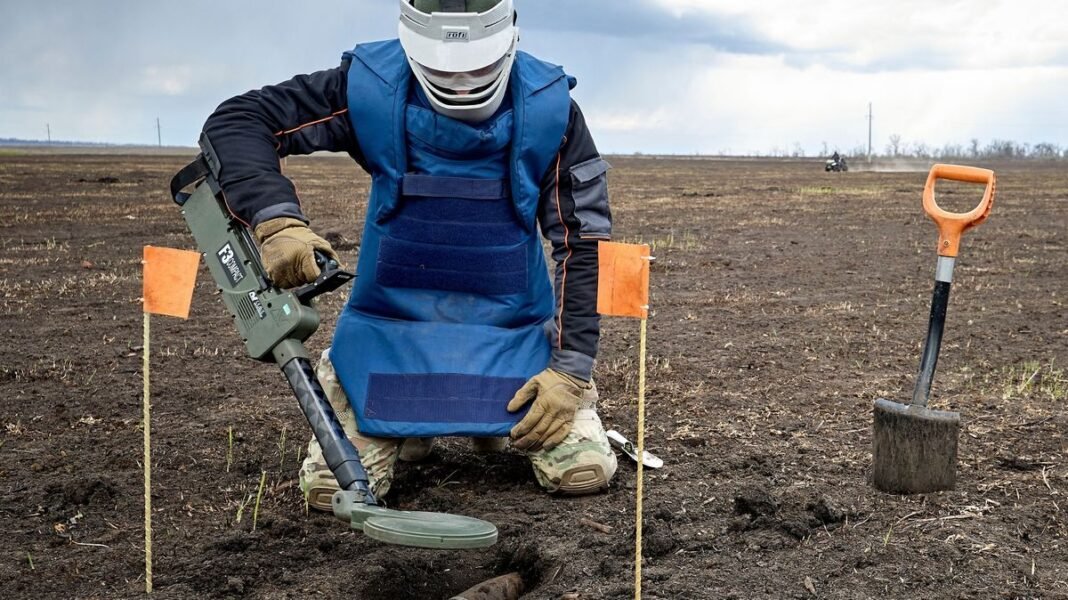
The toy-like mines, resembling harmless objects, are deceivingly dangerous, especially for children who may inadvertently trigger them. The activation pressure is minimal, making them highly hazardous even for small children. Authorities have struggled to detect and clear these mines, leading to numerous civilian casualties and injuries.
As of April 1, official reports indicate that over 1,400 individuals, including 147 children, have been injured by mines and explosive remnants of war since the invasion began. The presence of these hidden explosives has disrupted humanitarian operations, making it challenging for aid groups to deliver essential supplies safely.
Despite the risks, some organizations like Hope for Ukraine continue their operations in affected areas, adapting to the dangerous conditions. Civilians are constantly on edge, adjusting their routines to minimize exposure to potential dangers from drones and hidden explosives. The psychological toll of living under constant uncertainty is taking its toll on residents, who remain wary of both aerial and ground threats.
The situation in Ukraine highlights the grim reality faced by civilians as they navigate through a landscape riddled with hidden dangers, requiring utmost caution and vigilance for survival.