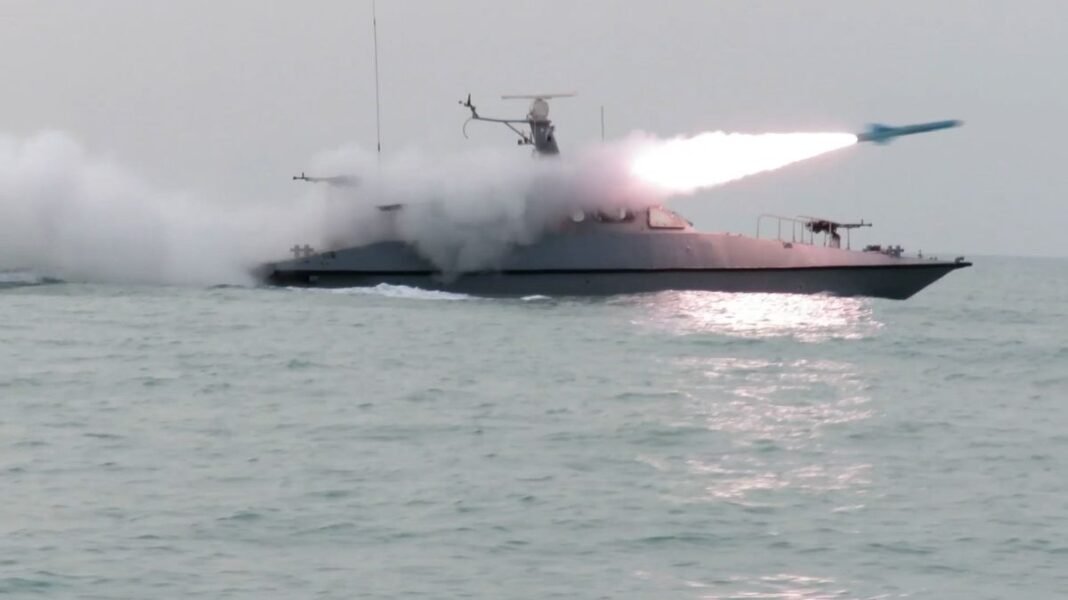
Fresh clashes between American and Iranian forces have dashed hopes for a quick reopening of the Strait of Hormuz. The recent military actions suggest that peace negotiations are at a critical juncture, teetering between peace and the possibility of a full-scale war. American forces targeted Iranian military sites in Bandar Abbas, prompting Tehran to claim a retaliatory strike on an American base.
The US airstrike was a response to an Iranian attack on a US commercial vessel using four drones, all of which were intercepted. This escalation led to the activation of air defenses in Kuwait, hinting that a US base in the region was the intended target of Iranian missile teams. These events highlight the precarious nature of the crisis, with the situation nearing a dangerous tipping point that could lead to a resurgence of hostilities.
Despite the heightened tensions, ongoing peace talks behind the scenes continue. Both sides are eager to end the conflict, with Iran taking steps to appease its disgruntled population by easing internet restrictions. In contrast, the war poses political challenges for President Trump in the US.
Reports suggest that Washington and Tehran are in the final stages of negotiating a possible agreement, although significant differences in demands remain. The US seems reluctant to exchange sanctions relief for Iran’s enriched uranium, crucial for halting Iran’s nuclear ambitions. Additionally, the potential inclusion of Lebanon in a peace deal, as demanded by Tehran to shield Hezbollah, raises complexities and uncertainties.
The growing strain between Washington and Israel adds another layer of complexity to the situation, as Iran tests US resolve amidst Trump’s search for a diplomatic solution. The silence regarding Trump’s calls for the region to embrace the Abraham Accords underscores the delicate balance of power in the region, with neighboring states cautiously observing developments.
The outcome of these negotiations could either lead to a fragile settlement or push the region closer to conflict, affecting the delicate balance of power and potentially reshaping alliances. This uncertainty may result in a significant setback for President Trump, highlighting the challenges of achieving a lasting resolution and positioning Iran in a stronger stance than during the previous administration.
Chris Hughes is an esteemed Defense and Security Editor at the Daily Mirror, renowned for his expertise in military and geopolitical affairs. His extensive reporting experience from conflict zones worldwide provides valuable insights into global security issues.