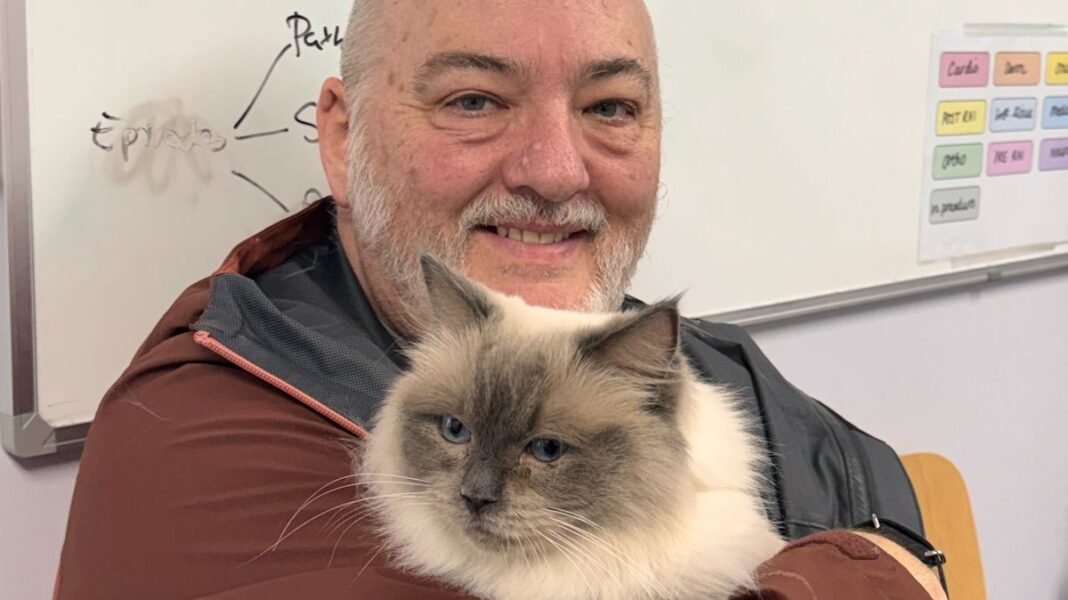
Cat enthusiast Nic Maber encountered a distressing situation when one of his cats required immediate veterinary attention. To his surprise, the vets billed him close to £2,000 after his five-year-old Ragdoll cat, Peppa, ingested bedding while under their care.
Nic, who owns six Ragdoll cats, sought help from an out-of-hours service through his Cardiff-based vet and transported Peppa to Newport. Subsequently, she was referred to Langford Small Animal Referral Hospital due to suspected heart issues. Peppa underwent various treatments during her four to five-day stay at the hospital, including an overnight observation.
While at the hospital, the attending vet recommended a gastroscopy for Peppa after suspecting she had consumed her bedding. The examination revealed two hairballs in her stomach, likely the foreign material detected earlier. An ultrasound also identified material in her colon, indicating the passage of the foreign object.
Further investigations, including a CT scan costing £1,899.86, were conducted. Despite a promised 50% discount on part of the procedure, Nic and his wife, Charlotte, who is battling terminal cancer, were distressed by the unexpected expenses and perceived lack of empathy from the veterinary staff.
Expressing his concerns to the vets about the substantial bill, Nic refused to pay the £1,899.86 charge related to an incident that occurred while Peppa was in their care. Following his complaint, the Clinical Governance Manager responded, offering a 50% discount as a goodwill gesture, with a requirement to sign a confidentiality agreement.
Seeking legal advice, Nic consulted multiple solicitors, but the cost outweighed the potential recovery. However, understanding his consumer rights, Nic sought assistance from The Complaining Cow to address the situation. An email was drafted to the CEO, highlighting potential breaches of consumer laws and the obligation to rectify the situation.
In response, the vet’s insurer agreed to waive all fees associated with Peppa’s treatment for the foreign body ingestion, acknowledging the goodwill gesture. Despite this resolution, concerns about the pressure to accept the settlement terms and confidentiality agreement persisted.
The incident with Peppa prompted discussions on consumer protection laws in the veterinary sector. While new regulations aim to enhance transparency in pricing, they may not have directly impacted this case. Notably, Langford Vets, affiliated with the University of Bristol Veterinary School, stands apart from the larger veterinary chains dominating the industry.
Reflecting on his experience, Nic transitioned to an independent vet practice, emphasizing the importance of personalized care and reasonable pricing. The new vet’s compassionate approach and fair charges resonated with Nic, contrasting the perceived profit-driven practices of larger veterinary establishments.
Neither the veterinary practice nor the insurer responded to requests for comments on the matter, indicating potential reluctance to engage further.