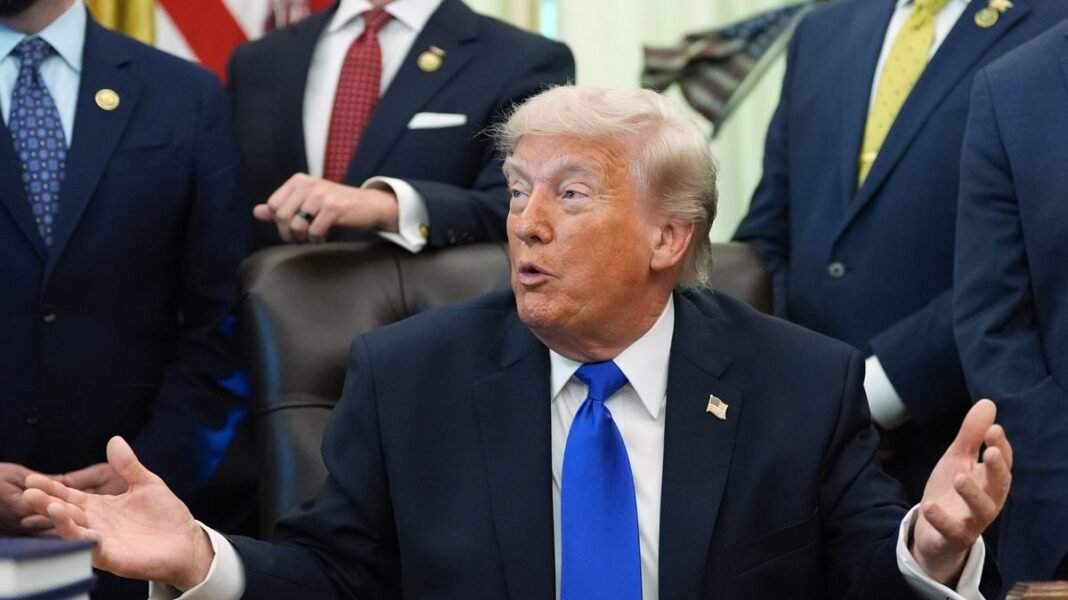
Donald Trump has threatened to withdraw troops from additional European countries, posing a new challenge to NATO. Following a similar warning to pull out troops from Germany, Trump stated on his Truth Social platform that the US is evaluating potential troop reductions in Germany, with a decision expected soon.
In a recent development, Trump criticized Chancellor Friedrich Merz, urging him to prioritize resolving conflicts with Russia and Ukraine and addressing internal issues over focusing on Iran. Merz had previously remarked that the US was being undermined by Tehran in negotiations related to the Iran conflict.
When asked about the possibility of withdrawing troops from Italy and Spain due to their reluctance to engage in the Iran conflict, Trump responded affirmatively, criticizing Italy for its lack of assistance and deeming Spain’s cooperation as inadequate.
Since the start of the Trump administration, there have been concerns among NATO allies regarding a potential US troop withdrawal, with the US signaling that Europe and Ukraine should take greater responsibility for their security. Typically, there are around 80,000-100,000 US personnel stationed in Europe, with expectations that troops deployed post-Russia’s aggression against Ukraine in 2022 would be the first to be withdrawn.
Germany plays a significant role in hosting various US military facilities, including command headquarters, an airbase, and medical facilities. Experts suggest that the US benefits from its presence in Germany for logistical support in Middle East operations, making a complete withdrawal unlikely.
Despite previous plans announced by Trump to withdraw troops from Germany, logistical challenges and financial implications have hindered such actions. The substantial investments made by the US in German infrastructure, along with the costs associated with redeployment, would require approval from the US Congress.
In summary, while Trump’s threats to withdraw troops from European countries continue to unfold, the complexities of logistics, financial considerations, and congressional approval pose significant obstacles to immediate troop movements.